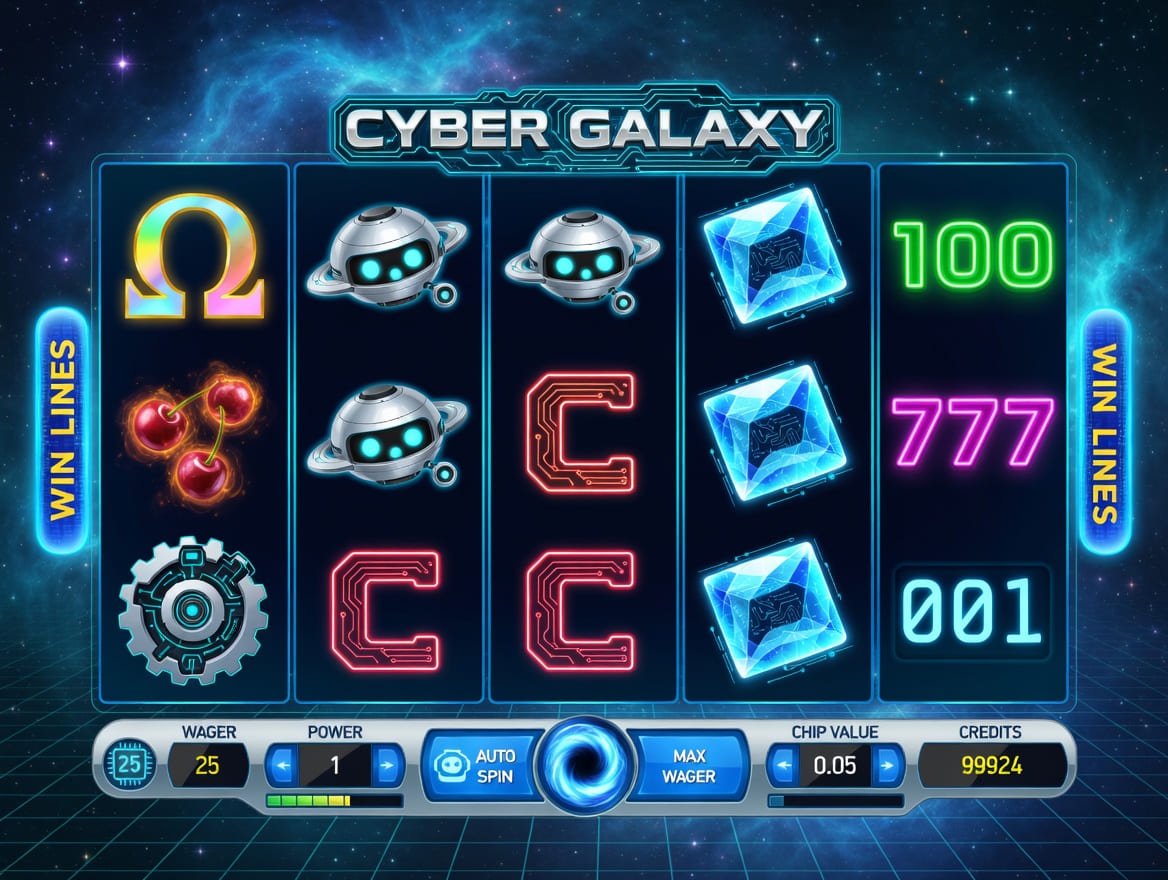
How RNG (Random Number Generator) Shapes Every Casino Win

In my years working behind the scenes in the online casino industry, I’ve come to understand that our entire world, from the spinning reels of a slot to the turn of a digital card, is built upon a single, silent, and often profoundly misunderstood principle. It’s the ghost in the machine, the invisible arbiter, the engine of pure chance that players feel the effects of but never truly see. I’m talking about the Random Number Generator, or RNG. For any player seeking to truly comprehend the games they play, a complete casino RNG explained guide is not just helpful; it is essential. It’s the key that unlocks the door between superstition and understanding. Forget lucky charms, betting patterns, or “hot” machines. Today, I’m going to take you on a deep dive into the technical, philosophical, and psychological reality of the RNG. I want to show you not just what it is, but how its chaotic, beautiful randomness is the very bedrock of fairness and the true source of every single jackpot you’ve ever dreamed of.
The Ghost in the Machine: What the RNG Truly Is… and Isn’t
Before we can appreciate its impact, we must first dispel the fog of myth that surrounds the RNG. Most players picture a simple digital coin-flipper, but the reality is infinitely more complex and, frankly, more elegant. The systems that power our games are a testament to the intersection of high-level mathematics and cutting-edge computer science.
Beyond a Simple “Randomizer”: The PRNG and its Seed
Here is the first piece of insider knowledge that separates a superficial understanding from a genuine one: the systems used in online casinos are technically Pseudo-Random Number Generators (PRNGs). The “pseudo” is not a sign of weakness or fakery; it is a mark of scientific necessity. A true random number generator (TRNG) relies on harvesting entropy from unpredictable physical phenomena, like atmospheric noise or radioactive decay. While fascinating, these are too slow and impractical for the millions of calculations needed every second in a global online casino environment.
A PRNG, by contrast, is an algorithm. It takes an initial value, known as a “seed,” and performs a series of incredibly complex mathematical operations on it to produce a new number. This new number then becomes the input for the next calculation, and so on, creating a sequence of numbers that is, for all practical purposes, indistinguishable from true randomness.
The brilliance of the seed is that it makes the process auditable. If an auditor knows the algorithm and the seed value used at a specific time, they can perfectly replicate the sequence of numbers generated to verify its integrity. However, the seed values themselves are generated with immense complexity and are changed constantly, making the sequence completely unpredictable from the outside. Think of it like a key to an impossibly complex cipher. Without the key (the seed), the output is just chaotic noise. With the key, its internal logic can be proven. This is the foundation of trustworthy, verifiable randomness.
The Speed of Chaos: A River of Numbers
To make this less abstract, I want you to imagine the RNG not as a thing that “wakes up” when you play, but as a relentless, ever-flowing river of numbers. This algorithm is not sitting idle waiting for you to click “spin.” It is in constant motion, generating hundreds of millions, or even billions, of multi-digit numbers every single second, 24/7.
When you press the play button on a slot machine or place your bet in digital blackjack, you are not telling the game to “decide” if you win or lose. Your action is simply a time-stamp. It’s the equivalent of dipping a cup into that furiously flowing river at one specific millisecond. The game plucks out whatever number happens to be flowing by at that exact instant-a number that was generated independently of you, your bet size, your play history, or your current balance. This number, and this number alone, is what determines the outcome of your game. This sheer velocity is why the idea of “timing” a spin is a fallacy. You cannot possibly react quickly enough to target a specific millisecond, and even if you could, you would have no way of knowing which number was coming next.
What the RNG is NOT
Understanding what the RNG is not is just as crucial as understanding what it is. The most persistent myths in gambling are born from assigning human-like qualities to this purely mathematical process.
- It is not cyclical. There is no “payout cycle.” The RNG does not follow a predictable loop where it is programmed to pay out after a certain number of losing spins. The sequence of numbers is so astronomically long that it would take lifetimes of continuous play for it to repeat. Every spin is a statistically independent event.
- It has no memory. The RNG is stateless. It does not know that you just lost twenty spins in a row. It does not know that the player before you hit a big win. It cannot recall your last ten sessions any more than a flipped coin can remember its previous ten landings. It exists in a perpetual, stateless present, a chaotic engine generating a future unwritten by the past.
- It is not aware. This is perhaps the most important point. The RNG is not connected to your player account. It doesn’t know if you are playing with bonus money or your own cash. It doesn’t know if you’ve just hit a jackpot and the casino “wants its money back.” It is a separate, isolated mathematical engine whose sole function is to generate numbers. The game’s logic then takes that number and uses it. The two systems-the random number generation and the player account management-are firewalled from each other.
The Journey from Abstract Number to Tangible Outcome
So, the RNG has produced an abstract string of digits. How does that become a row of winning symbols or a perfect blackjack hand? This translation process is the second critical stage, and understanding it further reinforces the fairness of the system.
The Mapping Process: A Digital Rosetta Stone
Every possible outcome in a casino game-every combination of symbols on a slot machine’s reels, every possible card in a shoe, every pocket on a roulette wheel-is assigned a numerical value or range of values. This is known as “mapping.” The game’s software contains a map, a sort of digital Rosetta Stone, that instantly translates the number provided by the RNG into a specific, tangible outcome.
Let’s take a simple three-reel slot as an example. The RNG might generate the number 1,234,567,890. The game’s software then consults its map:
- The first three digits, 123, might correspond to a ‘Cherry’ symbol on the first reel.
- The next three digits, 456, might correspond to a ‘BAR’ symbol on the second reel.
- The final digits, 789, might correspond to another ‘Cherry’ symbol on the third reel.
The result displayed to you is Cherry-BAR-Cherry, a losing spin. If the number generated had been 123,123,123, the outcome would have been Cherry-Cherry-Cherry, a jackpot win. The game isn’t making a decision; it is merely executing a pre-programmed translation of the random number it was given. This process happens in a fraction of a second.
The Role of the Game Provider, Not the Casino
This is a structural point that provides a massive layer of integrity. As a casino operator, we do not create the RNG or the games ourselves. We license them from specialized, multi-billion dollar software development companies like NetEnt, Play’n GO, Microgaming, and Evolution Gaming.
These providers are the ones who design the game, build the mathematical model (including its Return to Player percentage), and, crucially, operate the RNG that powers it. The game itself is hosted on the provider’s secure servers, not ours. When you play “Starburst” on our site, you are essentially opening a secure window to NetEnt’s servers. We, the casino, are the venue-the theater. NetEnt is the film studio, the director, and the projectionist. We cannot tamper with the film. This separation of duties is a cornerstone of the industry’s security model. The provider’s entire global business and its portfolio of licenses in dozens of jurisdictions rest on the unimpeachable integrity of its RNG. They would never risk it all to rig a game for a single casino operator.
Slots, Blackjack, and Roulette: A Universal Language
This core principle of RNG-to-outcome mapping is universal across all digital casino games.
- In slots, as described, it determines the stopping position of each virtual reel.
- In digital Blackjack, the RNG is used to shuffle a virtual deck (or multiple decks) of cards with perfect, unpredictable randomness. When a card is “dealt,” the game is simply taking the next card from this constantly re-shuffled virtual shoe.
- In RNG-based Roulette, the RNG’s number is mapped to one of the 37 or 38 pockets on the wheel, determining the outcome of the spin with the same probabilities as a perfectly balanced physical wheel.
In every case, the RNG is the prime mover, the source of the raw, unpredictable chance that the game’s logic then translates into the spectacle you see on your screen.
Why Our Entire Industry Rests on Auditable Randomness
At this point, you might be thinking, “This all sounds great in theory, but how can I trust that it’s actually happening this way?” This is where the business, regulatory, and auditing frameworks come into play. A fair RNG isn’t just an ethical nice-to-have for a legitimate casino; it is an absolute economic and legal necessity.
The Economic Imperative of Fairness
From a purely cynical business perspective, rigging games is a terrible long-term strategy. The entire allure of casino gaming, the entire marketing message, is built on the dream of the life-changing win. Big wins, even medium-sized ones, create excitement. They generate word-of-mouth and give players a reason to believe it could happen to them.
A casino that rigs its games to prevent big payouts would be killing its golden goose. There would be no jackpot winners to celebrate, no thrilling stories to share, and player trust would evaporate instantly. The legitimate casino’s business model is not based on preventing wins; it’s based on the mathematically guaranteed house edge (the difference between the total bets and the RTP) over millions of players and billions of spins. We profit from volume and longevity, which can only be achieved by providing a verifiably fair gaming experience. The house edge is our profit; the RNG is our guarantee of fairness to the player.
The Auditors: The Forensic Scientists of Chance
Trust cannot be based on our word alone. That’s why the entire industry relies on independent, internationally recognized testing laboratories like eCOGRA (eCommerce Online Gaming Regulation and Assurance), Gaming Laboratories International (GLI), and iTech Labs. These are the forensic accountants of the digital gaming world.
Their job is to audit the RNGs of game providers. This is an incredibly rigorous process. They don’t just “look at the code.” They request massive datasets from the provider-we’re talking about billions or even trillions of generated numbers. They then subject these datasets to a battery of sophisticated statistical tests. These tests are designed to detect even the slightest deviation from statistical randomness. They check for patterns, biases towards certain numbers, and predictability. Passing these tests is incredibly difficult and is the gold standard that proves a PRNG is performing correctly.
A reputable casino will not only use games from providers who undergo these audits but will often proudly display the certifier’s logo (like the eCOGRA “Safe and Fair” seal) in the footer of its website. This is your third-party guarantee that the engine powering the games has been scientifically proven to be fair.
The Regulatory Guillotine: Licensing and Compliance
Finally, the integrity of the RNG is baked into the legal framework of our operating licenses. To obtain and maintain a license from a top-tier regulatory body like the Malta Gaming Authority (MGA) or the UK Gambling Commission (UKGC), a casino must prove that all the games it offers are powered by certified RNGs from approved providers.
There are no exceptions. If a regulator were to find that a casino was using uncertified or tampered software, the consequences would be immediate and severe: massive fines, public censure, and the revocation of our operating license. In essence, our license to exist is contingent on the proven fairness of our RNGs. This regulatory guillotine ensures that compliance isn’t optional; it’s a matter of survival.
Battling Our Own Brains: Why Fair RNGs Can Feel Unfair
This is perhaps the most complex and important part of the entire discussion. If the RNG is so provably fair, why do players so often feel like they are being cheated? The answer lies not in the silicon chip, but in the wiring of our own minds. The human brain is a magnificent piece of hardware, but it is notoriously bad at intuitively grasping the nature of true randomness.
The Pattern-Seeking Primate
Our brains are evolutionary marvels of pattern recognition. This skill helped our ancestors find food, identify predators, and make sense of the world. However, this powerful instinct goes into overdrive when faced with the chaotic output of an RNG. We see patterns where none exist-a phenomenon known as apophenia. We invent narratives of “hot streaks” and “cold streaks,” believing that the machine is in a certain “mood.” In reality, we are just imposing our desire for order onto a fundamentally disordered sequence of events. A streak of ten losses in a row feels significant and personal, but to the RNG, it’s just one of countless possible sequences, no more or less likely than any other.
The Clash with Volatility
The feeling of being “rigged” is often a direct result of misunderstanding a game’s volatility (or variance). A low-volatility game is designed to provide frequent, small wins. A high-volatility game, on the other hand, is designed for long dry spells punctuated by rare but massive wins.
A player on a high-volatility slot can go hundreds of spins with minimal returns. During this time, it is incredibly easy to conclude that the game is cheating. But the RNG is performing perfectly; it is the game’s mathematical model, which the player chose to play, that is delivering the high-risk, high-reward experience it promised. The long losing streak is not a malfunction of the RNG; it is a fundamental feature of a high-volatility design. It is the necessary mathematical counterbalance to the possibility of winning 5,000 times your stake on a single spin.
The Gambler’s Fallacy and the Illusion of Control
Two powerful cognitive biases complete this illusion. The Gambler’s Fallacy is the mistaken belief that past random events influence future ones (“The roulette ball has landed on red five times, so it’s due for black”). The RNG, having no memory, ensures this is never true. The Illusion of Control is the belief that our actions, like stopping the reels manually or changing our bet size, can influence the RNG’s outcome. Since the outcome is determined the microsecond you press “spin,” any subsequent actions are purely cosmetic. When these deeply ingrained beliefs clash with the indifferent reality of the RNG, the resulting frustration is often misinterpreted as the game being unfair.
The RNG: Our Silent, Unwavering Partner
In the end, the Random Number Generator is not your adversary. It is the silent, impartial guarantor of the social contract between you and the casino. Its purpose is not to make you lose, but to ensure that every single spin of every single game is a fresh, independent event, untainted by the past and unpredictable in the future. It is the mechanism that ensures that the player who places a minimum bet has the same chance of hitting the jackpot combination on their next spin as the high roller who has been playing for hours.
It strips away superstition and replaces it with pure mathematics, creating a level playing field where the only thing that matters is the chaotic, beautiful, and verifiably fair flow of random numbers. Understanding its role doesn’t just demystify the game; it empowers you to appreciate it for what it truly is: a form of entertainment built on one of the most elegant and rigorously tested applications of chance ever devised. It is the silent heartbeat that makes every win possible.